

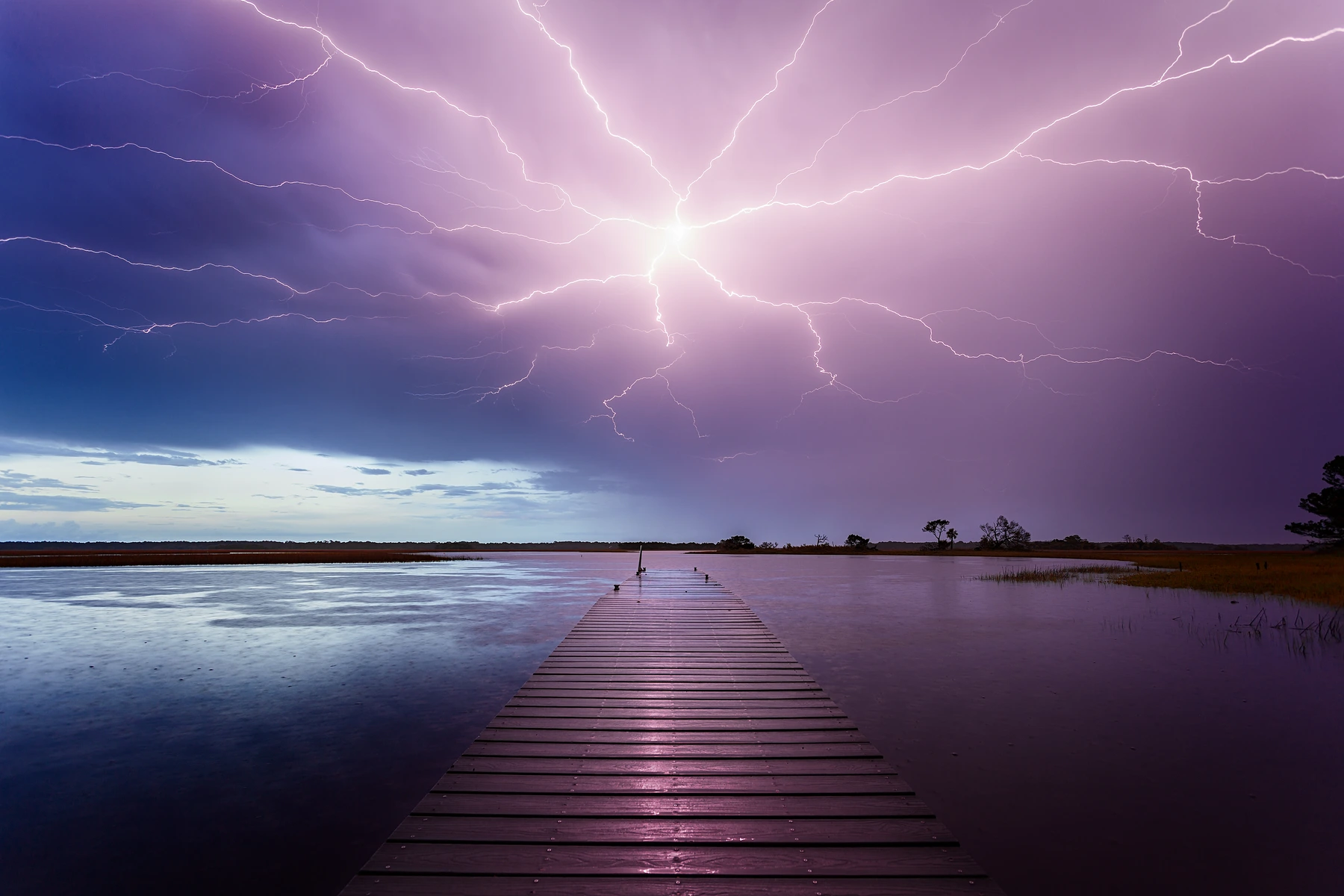
The Arrival: Capturing a Once in a Lifetime Lightning Strike in Northeast Florida
Electric Atmosphere
The heavy, humid air of a Jacksonville summer evening has a specific weight to it. You're not walking around in it. You're swimming in it. It is the kind of heat that clings to you, made worse by the frantic energy of an approaching thunderstorm. That evening, the sky turned a moody purple as a late afternoon cell rolled in. I heard the thunder and watched the lightning strikes on the radar. I realized the trajectory was heading right toward a nearby dock in the marsh at Cedar Point in the Timucuan National Preserve. I grabbed my gear and headed out, knowing the window for catching the storm wouldn't last long.
The no-see-ums were out in force. They seemed agitated by the electricity in the air and the racket from the thunder, biting every inch of exposed skin. It is excruciating being constantly bitten by them. They laugh in the face of 100% DEET.
Setting Up the Shot
I ignored the no-see-ums as best I could while I set up my gear, but still had to stop every now and then to scratch where they'd bitten and swat them away by the dozens.
Despite the storm clouds, there was still plenty of ambient light in the sky. I wanted the lightning bolts to look bold and defined, not thin or faint. To achieve that, I chose a wider aperture of f/5.6. The trade-off for that wider opening was a much faster shutter speed than I would normally use for lightning.
I started with exposures of only half a second. I locked the shutter release open, letting the camera fire continuously.
Click. Click. Click. Click. Click.
Most of my 500+ shots that evening looked like this:

In this kind of work, you are essentially playing a game of chance against the camera's delay between shots. Every camera has a brief window of latency where the shutter is closed and before the shutter opens for the next shot. If the lightning strikes during that millisecond of "dark time," the shot is missed. It is a technical bottleneck that no amount of planning can entirely overcome. You cannot use a Neutral Density (ND) filter to extend your shutter speed in this scenario because that reduces the light coming in from the lightning itself. You might as well just stop down the aperture.
As the sun sank further, the light dropped enough for me to push the shutter speed to a second and a half. This slightly improved the chance of capturing a bolt by reducing the ratio of time spent between shots versus the time the shutter was open. The rhythm slowed.
Click.... Click.... Click....Click....Click....
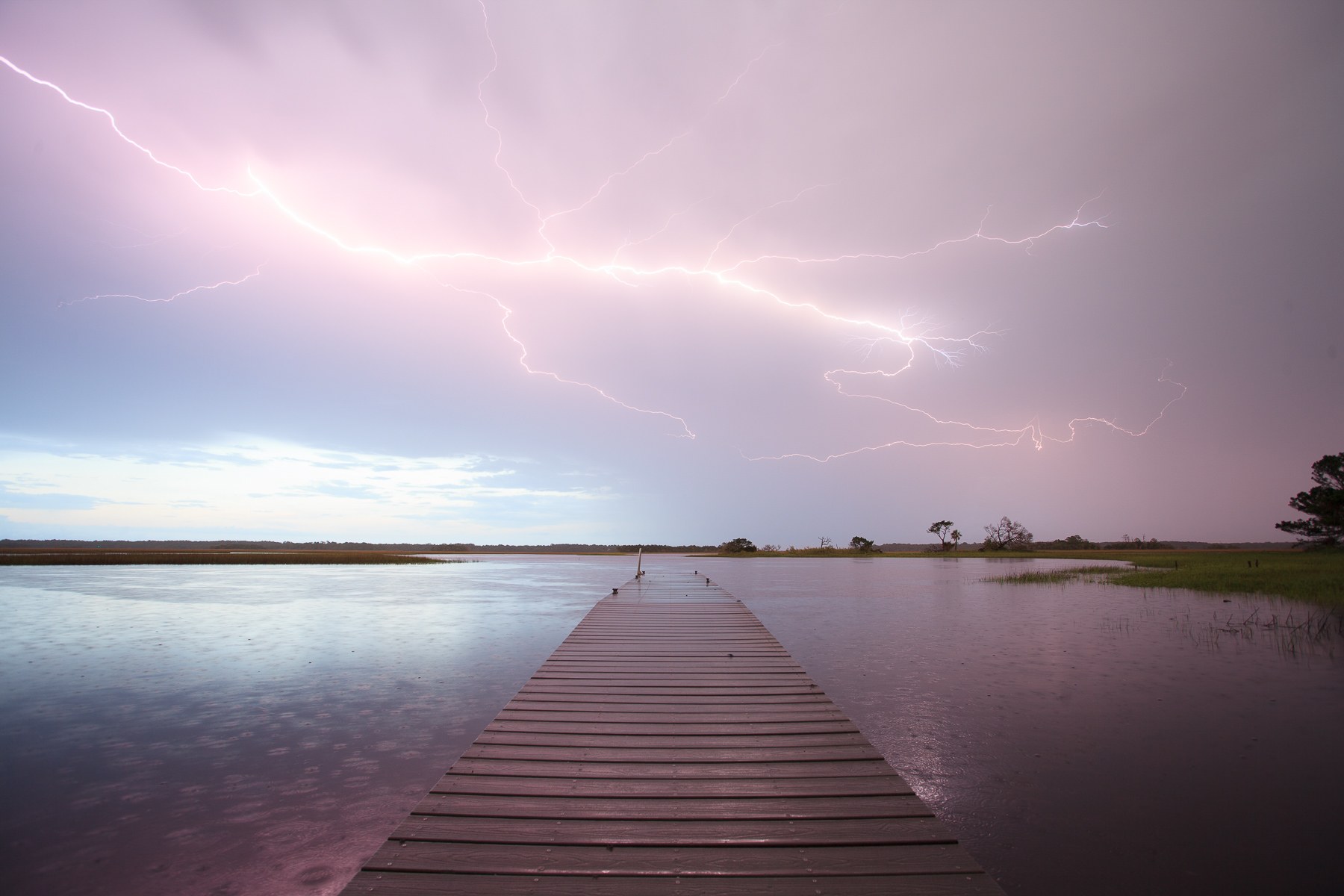
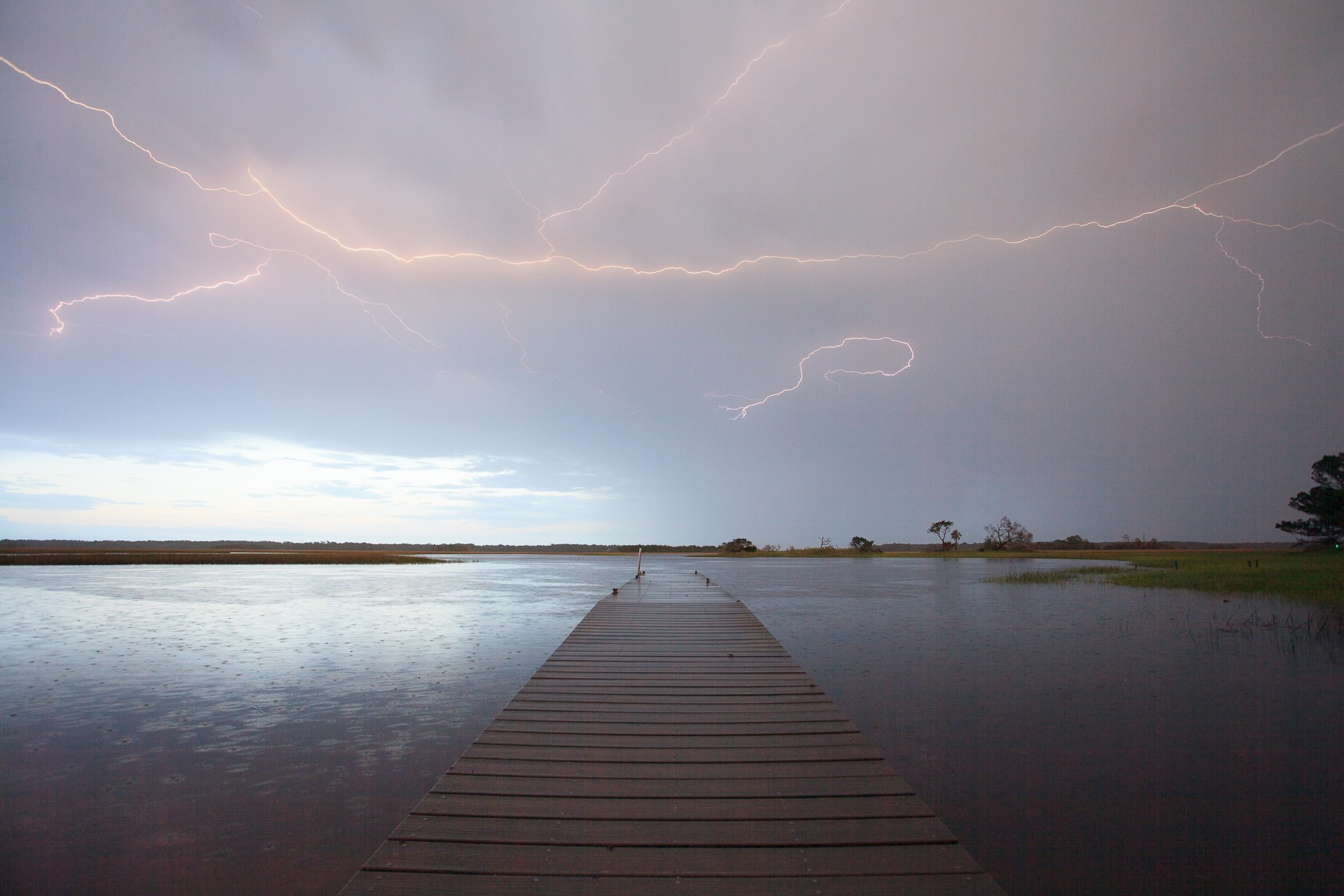


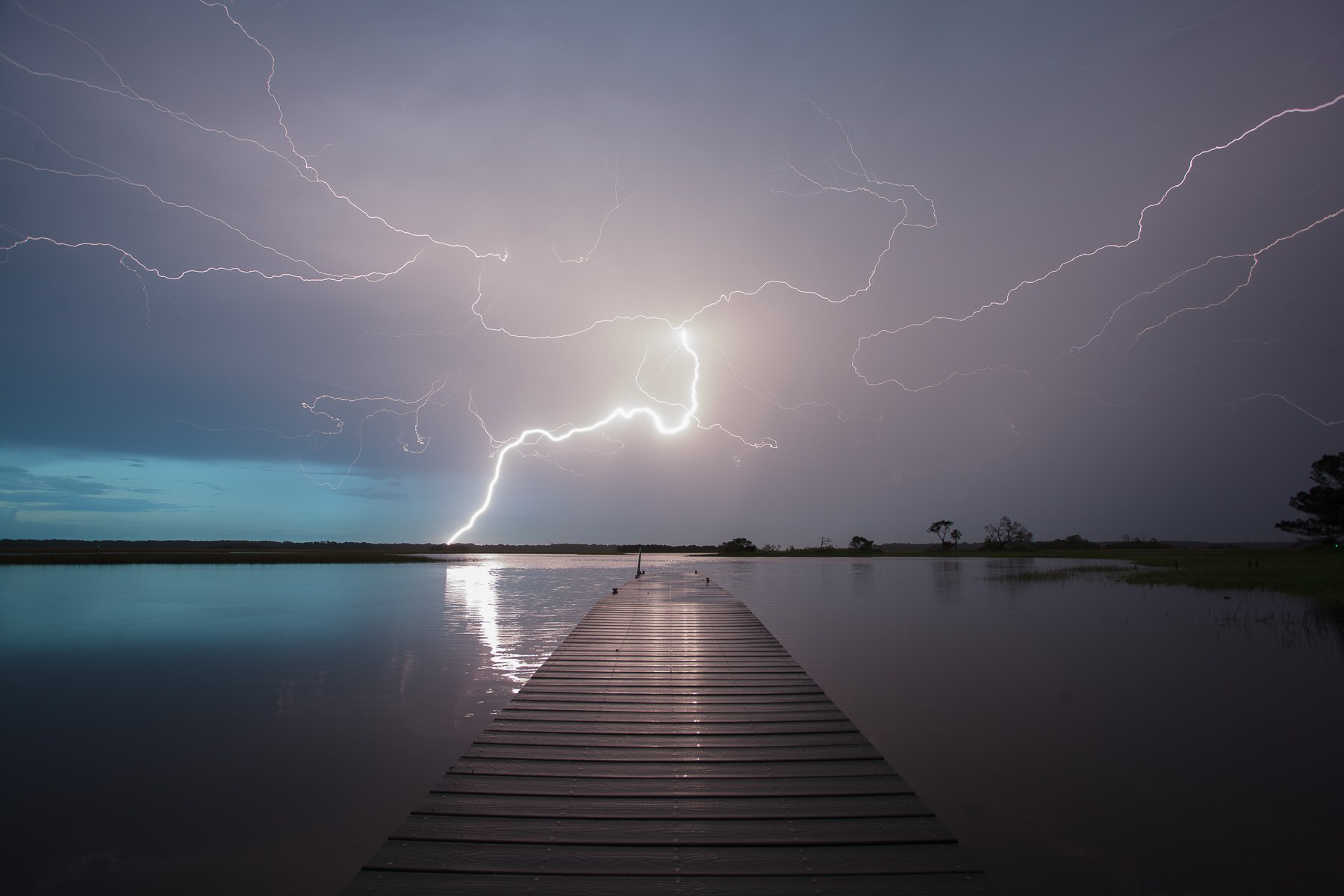

Just as one of the frames ended, a massive bolt tore through the clouds. I was certain I had missed it in the gap between actuations. I stopped the sequence, my heart racing, and checked the back of the camera.
There it was.
The Image Appears
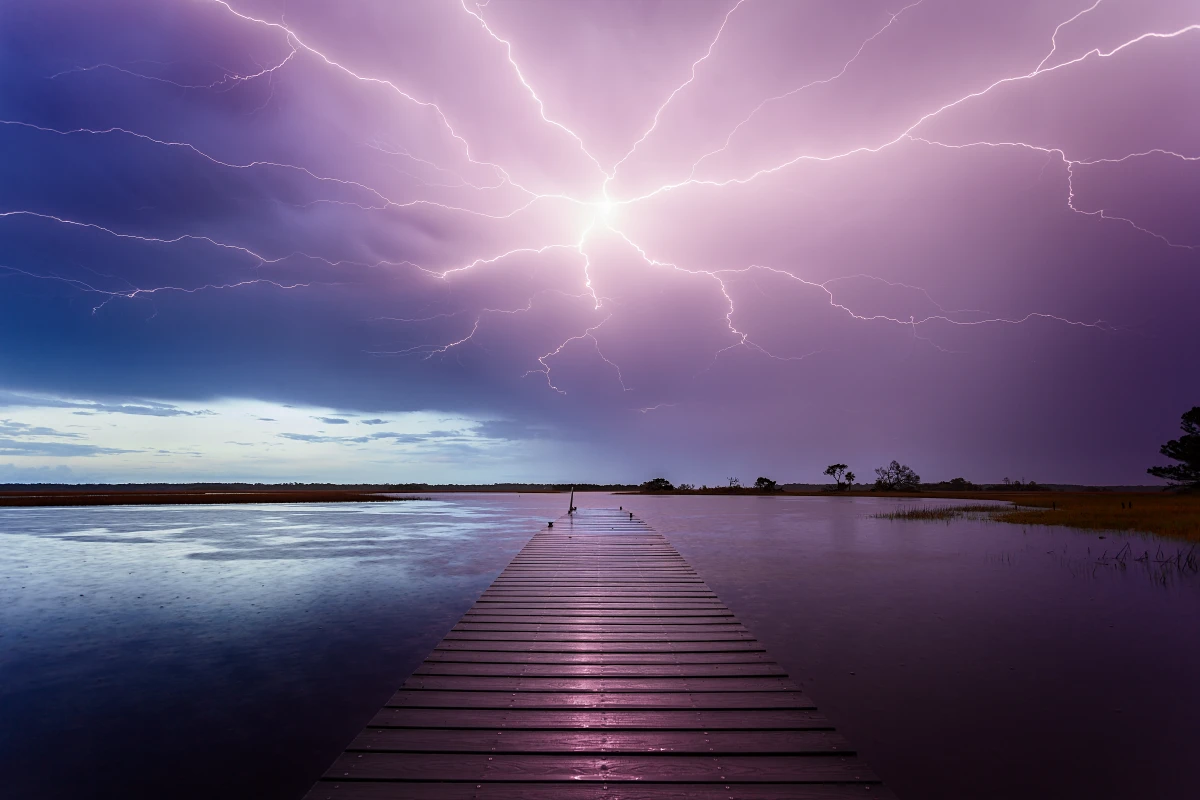
The way the light illuminated the clouds felt less like a weather event and more like a visitation. It looked like an alien vessel descending through the atmosphere or perhaps the heavens opening up. It had a sense of profound entry, which is why I titled the piece "The Arrival."
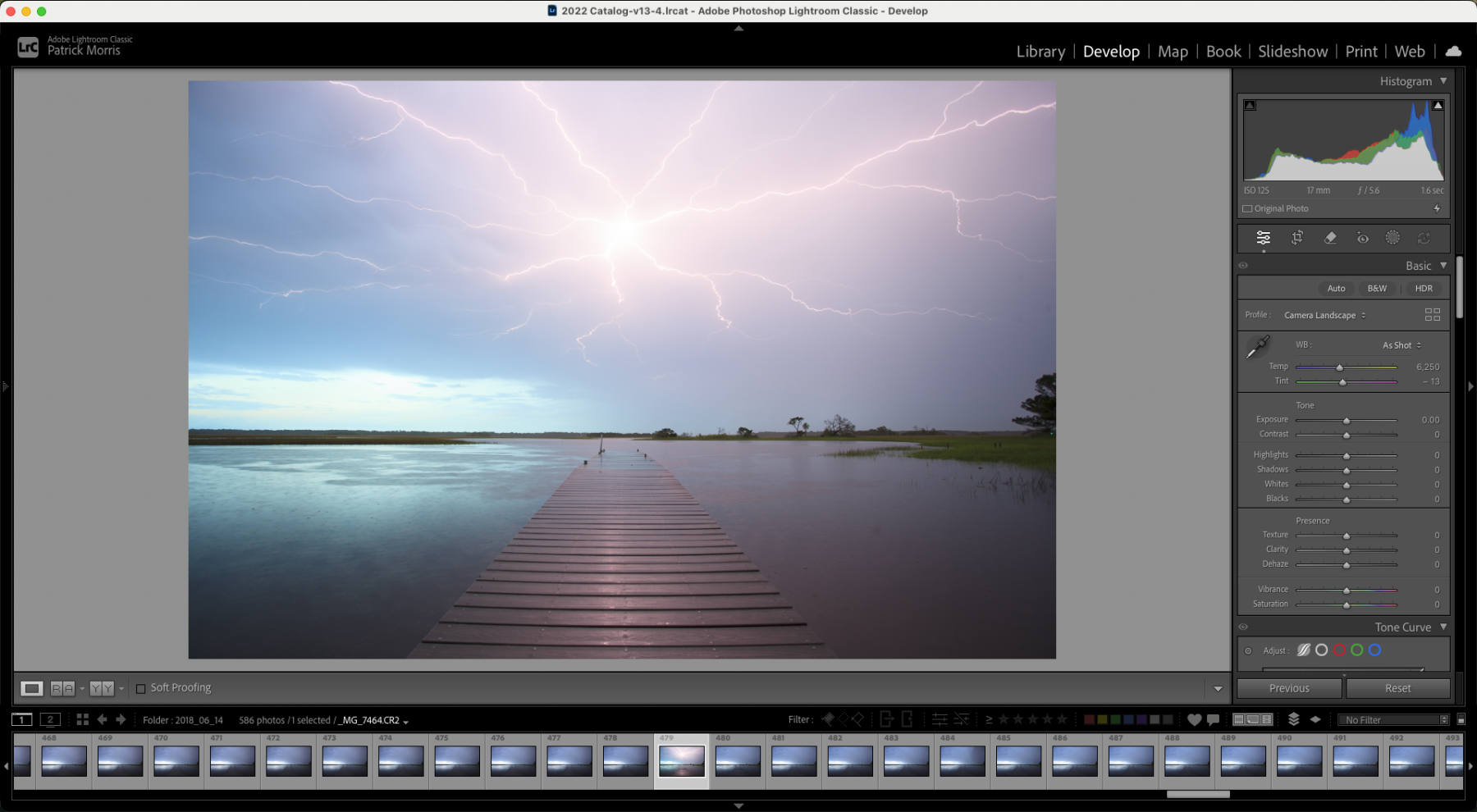
The final image is the result of a very deliberate editing process. I have included a screenshot from Lightroom in this post so you can see the raw, unedited frame next to other shots from that evening. I began the work with dodging and burning to guide the viewer’s eye toward the bolt and away from distracting elements in the foreground. I then applied a light Orton effect to give the image a bit more punch and internal glow.
Because it was raining during the shoot, I had to meticulously remove dust and water marks that had landed on the lens. I finished the piece with a subtle vignette and precise adjustments to the color saturation and tonal balance. The result is a high-contrast, vibrant image that is particularly suited for fine art photography prints.
Because of the deep blacks and the intense, glowing highlights of the lightning, "The Arrival" looks best on a face-mount acrylic print. The acrylic medium adds a sense of depth and luminosity that traditional paper cannot quite match.
I have recently updated the gallery on my website to help you visualize how a piece like this would look in your space. When you view the image on my site, you can now see it mocked up on several pre-rendered walls. Even better, you can upload a photo of your own room to see exactly how it would look over your furniture. If you are browsing on a mobile device, you can use the new AR tool to see the print in 3D and real-time on your wall.
Try it on your own wall: View "The Arrival" and use the AR tool here:
💬 Have thoughts on this post?
I'd love to hear from you.